

Last Updated: October 25, 2026
Quick Summary
Buying from veteran owned shops means supporting businesses where a veteran holds an ownership stake and usually runs day-to-day operations, often with certification to prove it. You get disciplined quality control, plain-spoken customer service, and one person who owns the outcome. Your money goes to a small operation that stands behind its work.
- Certification confirms ownership, not quality, so judge products on materials, reviews and policies.
- Veteran-owned shops often build self-inspection into every production stage rather than a final check.
- Ask directly who served and in what branch, and click any badge to see if it links to a verifier.
- A U.S. Navy Slate Coaster Set of 4 costs $40.00 with a protective finish and walnut plywood holder.
- Leave a specific review naming the engraving and materials, since vague praise helps a shop less.
Table of Contents
- Why Buying From Veteran Owned Shops Feels Different
- What Qualifies as a Veteran-Owned Business
- Military Skills That Show Up in the Product: Discipline, Quality, and Reliability
- Customer Service and Accountability You Can Count On
- How to Find Veteran-Owned Businesses Without Guessing
- Gifts From Veteran-Owned Businesses: Everyday Purchases, Not Just Holidays
- Ways to Support Veteran-Owned Businesses Beyond the Checkout Button
- Evaluating Value and Quality Before You Spend More
- Frequently Asked Questions
Why Buying From Veteran Owned Shops Feels Different
Most people who seek out veteran owned shops expect a transaction. They get something closer to a handshake.
At Gi Laser Art, we live on the other side of that counter. We are a veteran-owned small business, and we have watched customers come back not just for a coaster set or a wooden sign but because the buying experience itself felt honest.
What Qualifies as a Veteran-Owned Business
A veteran-owned business is a company in which one or more veterans hold a meaningful ownership stake and typically manage day-to-day operations. The exact threshold varies by program and certifying body, so the label alone tells you less than the documentation behind it.
Ownership Rules, Certification, and Service-Disabled Status
Ownership rules matter because "veteran-friendly" and "veteran-owned" are not the same claim. A shop can hire veterans without being veteran-owned. A shop can donate to veteran causes without being veteran-owned.
Certification adds a layer of proof. Third-party certifiers and federal programs, including the SBA's veteran-owned business guidance, review ownership documents before granting status. Service-disabled veteran-owned businesses face an additional layer of verification through programs like the VA's Vets First Verification Program, which confirms both the disability rating and the ownership structure.
Here is the practical takeaway: certification is a signal, not a guarantee of quality. It tells you the ownership claim has been checked. It does not tell you the engraving will be crisp or the shipping will be fast.
Military Skills That Show Up in the Product: Discipline, Quality, and Reliability
The traits customers notice first in veteran owned shops are not abstract virtues. They are process habits, and they show up in ways a shopper can actually see before spending money.
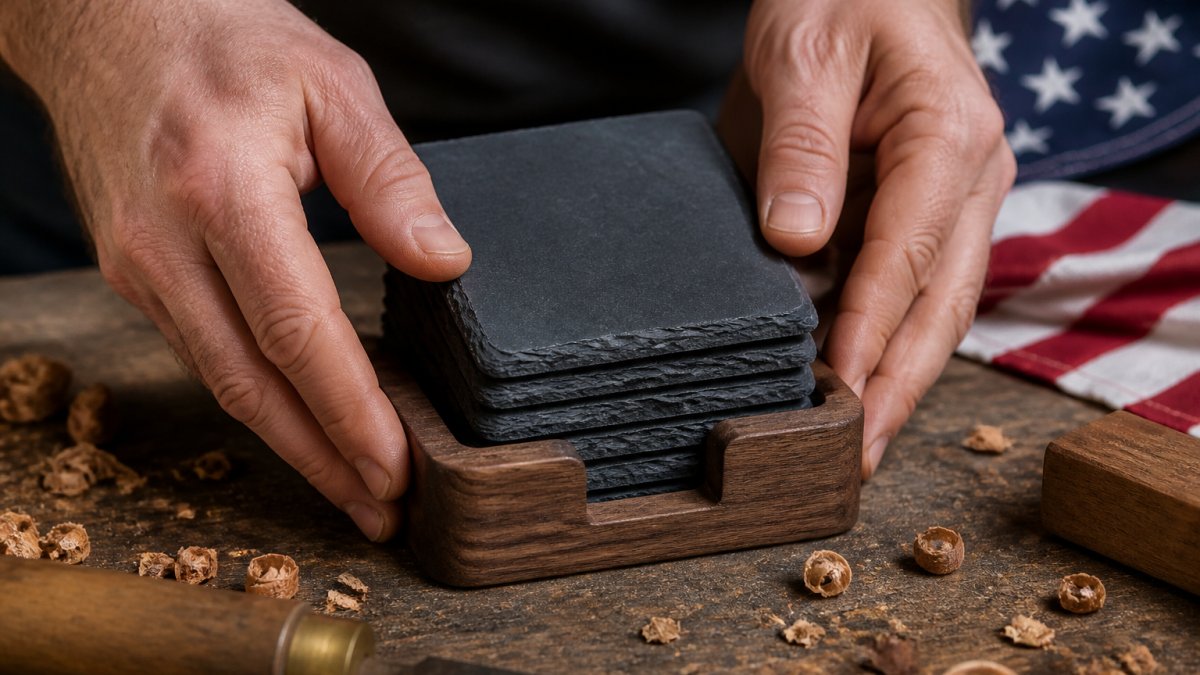
Military service trains people to follow checklists, inspect their own work, and treat a deadline as a commitment rather than a suggestion. Those habits translate into product quality and reliability through a few concrete mechanisms:
- Standard operating procedures. Many veteran entrepreneurs write down each step of production, from material intake to final inspection, because in service a written procedure is what keeps a team consistent when conditions change. In a small shop, that means the tenth order is built the same way as the first.
- Pre-flight checks. A common pattern is a pre-production review before any material is cut or engraved: confirming the artwork file, testing settings on scrap, and verifying the order details against the customer's notes. This is the retail equivalent of a pre-mission checklist, and it catches the errors that are cheapest to fix.
- Self-inspection and rework discipline. Veteran-owned shops often build quality control into every stage rather than treating it as a final step. In a laser engraving shop, that means checking artwork files before the laser fires, testing settings on scrap material, and inspecting each finished piece before it goes in the box. The discipline is boring. The result is not.
That same work ethic shows up in communication. Veteran-owned businesses tend to answer in plain language: what they can do, what they cannot do, and what it will cost.
A balanced view matters here. Plenty of non-veteran shops run excellent operations, and a veteran-owned label is not a quality guarantee. The useful question is whether the shop can explain its process in specific terms. A shop that can walk you through its checkpoints, its materials, and its redo policy is showing you the discipline in practice, regardless of the owner's background.
Customer Service and Accountability You Can Count On
Accountability is the benefit customers mention most often, and it is the easiest to test. Ask a question before you buy.
Veteran-owned businesses tend to answer in plain language. They tell you what they can do, what they cannot do, and what it will cost.
Customer service in a veteran-owned shop usually means one person owns the outcome. If a piece arrives damaged, the owner feels the loss personally because the business carries their name.
How to Find Veteran-Owned Businesses Without Guessing
Finding veteran owned shops takes a little more effort than searching a marketplace, but the tools exist and most are free. The key is knowing which sources actually verify status and which simply collect listings.
Start With Directories That Require Documentation
Begin with sources that ask for proof before they list a business:
- The National Veteran Business Development Council certifies veteran-owned firms and maintains a searchable database. Its verification process reviews ownership and control documents, so a listing there carries more weight than a self-reported badge.
- The SBA's business search tools and the VA's vendor databases list verified businesses, particularly those that pursue government contracts. These are useful when you want to confirm that a business has cleared a documented review.
- State-level veteran business directories and local chambers of commerce often maintain lists, but verification standards vary widely by state. Treat these as a starting point, not a final answer.
Understand the Difference Between Certified and Self-Identified
This is the part most shoppers miss. "Veteran-owned" is not a single, legally defined label for consumer purposes. A business can be:
- Certified by a third-party certifier or a federal program, which means ownership and control were reviewed against written criteria.
- Self-identified, which means the owner states a veteran connection without an outside review.
- Veteran-friendly, which may mean the business hires veterans or donates to veteran causes without being veteran-owned at all.
None of these is automatically dishonest, but they are not the same claim. A certification badge is only meaningful if it links to a verifier you can check. A logo image with no link is decoration.
U.S. Navy Slate Coaster Set – Set of 4 →
Apply a Simple Verification Filter
- Ask directly. A legitimate veteran-owned shop will tell you who served and in what branch without hesitation.
- Check the badge. Click it. If it does not lead to a verifier's page or a certificate number, treat the claim as self-identified.
- Read the about page critically. Vague language like "supports our troops" is not the same as "founded by a Marine Corps veteran."
That last point matters more than most buyers realize. A shop that can explain its materials and methods is a shop that knows its own work, and that is a useful signal whether or not the ownership claim is certified.
Search by Location, Category, and Certification Status
Most reliable directories let you filter by state, product category, and whether the business holds a certification. If you are shopping locally, combine a directory search with a map search and then verify the ownership claim on the shop's own site. If you are shopping online, start with the certifier databases and work outward. The extra step takes a few minutes and separates a documented claim from a hopeful one.
Gifts From Veteran-Owned Businesses: Everyday Purchases, Not Just Holidays
Gifts from veteran-owned businesses do not need a patriotic occasion to make sense. The best ones earn a place on a desk, a bar, or a coffee table all year.
Take a simple example from our own catalog. A U.S. Navy Slate Coaster Set - Set of 4 is a set of four laser-engraved slate coasters with a protective finish and a walnut plywood holder. A U.S. Coast Guard Slate Coaster Set - Set of 4 works the same way for someone with a Coast Guard connection. The U.S. Marine Corps Slate Coaster Set - Set of 4 and the U.S. Air Force Slate Coaster Set - Set of 4 round out the branches, each at $40.00 with the same construction.


Best for: a housewarming, a retirement, a promotion, or a "just because" gift for someone who served. Skip if: the recipient has no military connection and would prefer a neutral design.
The broader point is that everyday purchases carry more weight than seasonal ones.
Ways to Support Veteran-Owned Businesses Beyond the Checkout Button
Supporting veteran owned shops goes well beyond clicking buy. The most valuable thing a customer can do is become a repeat customer, and the second most valuable thing is to tell other people why.
Here is what actually moves the needle:
- Leave a specific review. "Great quality" helps a little. "The engraving was crisp and the coaster holder was solid walnut" helps a lot.
- Refer them to your workplace. Corporate gift buyers and office managers are always looking for vendors with a story.
- Buy the practical item, not the patriotic one. A shop survives on repeat orders for useful products, not on one-time sympathy purchases.
There is a balanced way to think about this. Veteran-owned businesses do not want pity purchases. They want customers who buy because the product is good. The veteran connection is a reason to look.
Evaluating Value and Quality Before You Spend More
Higher prices on custom work are usually explained by materials, labor, and time, not by the veteran label.
If you are weighing whether custom work is worth the cost, start with turnaround.
Use this checklist before you commit:
- Does the listing name the material, or just say "premium"?
- Is the design engraved into the surface, or printed on top?
- Is there a protective finish, and does the shop explain what it protects against?
A shop that answers all six in specific terms is a shop worth paying more for.
Use this checklist to judge whether a custom piece is worth the higher price before you commit.
| Check | What to look for |
|---|---|
| Material | Listing names the material, not just "premium" |
| Design method | Engraved into the surface, not printed on top |
| Protective finish | Shop explains what the finish protects against |
| Photos | Real photos of finished pieces, not just mockups |
| Turnaround | Stated in days, not "soon" |
| Redo policy | Clear policy for redo or replacement if result misses |
Frequently Asked Questions
What are the benefits of buying from veteran owned shops?
The benefits go beyond the product itself. Veteran owned shops often bring military habits into the business: tight quality control, clear communication, and accountability when something goes wrong. Your money also stays closer to home, since these are usually small businesses hiring locally and reinvesting in their communities. Many, like Gi Laser Art, tie purchases to a cause, sending a portion of proceeds to service dog programs for veterans. You get a durable, often personalized item and a purchase that does something measurable beyond the transaction.
How can I verify that a business is actually veteran-owned?
Ask directly and look for documentation. A legitimate veteran-owned shop can tell you which branch and era of service the owner comes from, and many hold certifications from the Small Business Administration or a national verification program for veteran-owned and service-disabled veteran-owned businesses. Check the About page for a named owner and service history, then cross-reference with a business directory. Vague claims like supporting the troops without a named founder are a signal to dig deeper before you buy.
Do veteran-owned businesses offer unique products or services?
Many do, because they tend to be small operations built around a specific craft rather than mass production. Gi Laser Art, for example, laser-engraves slate coaster sets in Navy, Coast Guard, Marine Corps, and Air Force designs at $40.00 per set of four, each with a protective finish and a walnut plywood holder. Smaller runs also mean personalization is realistic, so you can order something tied to a specific unit, milestone, or recipient instead of picking from a generic catalog.
How does supporting veteran-owned businesses help local communities?
Small-business spending circulates locally in a way that big-box purchases often do not. Veteran-owned shops tend to hire nearby, use regional suppliers, and keep decisions with an owner who lives in the area. That shows up as local jobs and steadier neighborhood commerce. Some businesses go further: Gi Laser Art directs a portion of proceeds to providing service dogs for fellow veterans, so a single purchase can support a local operation and a veteran-focused cause at the same time.
The real test of buying from a veteran-owned shop is not sentiment. It is whether the product holds up and the person behind it stands behind it. We built Gi Laser Art around that idea: custom laser engraving on wood and slate, handcrafted pieces with meticulous attention to detail, and a portion of proceeds going to provide service dogs for fellow veterans. If you want a gift that carries both craftsmanship and a cause, browse our custom engraved keepsakes and add one to your cart.
